 +86 18033331305
Leave Your Message
-
CONTACT NUMBER
-
 CONTACT NUMBER
-
 CONTACT NUMBER
A 16mm Pickleball Paddle is often chosen for its softer feel and steadier response, but thickness alone cannot guarantee better play. In 2026, buyers will find paddles with different core materials, surface textures, shapes, and balance points. Each detail can change how the paddle feels during a quick kitchen exchange or a deep baseline drive. Small differences matter.
Pickleball Studio founder and paddle reviewer Chris Olson has tested equipment across many brands. A fair paraphrase of the lesson his reviews reinforce is: “Choose by on-court feel, not the spec sheet alone.” That is useful advice, not a universal rule. A thicker core may help some players absorb pace and place controlled shots, while others may find it less lively on attacking drives. Grip size matters too. A handle that feels comfortable during warm-ups can still create fatigue after a long match.
This guide compares leading 16mm paddles for control, comfort, spin, and value. It also looks at weight, handle length, materials, and reported durability, rather than treating marketing claims as proof. Where possible, check independent testing and current product specifications; designs can change between model years. Try a paddle before buying if you can. Feel comes first. And one honest caveat: no review can predict every player’s touch. Your swing, grip, and experience all shape the result. The best choice should feel stable in your hand, respond predictably at the net, and suit the way you actually play.
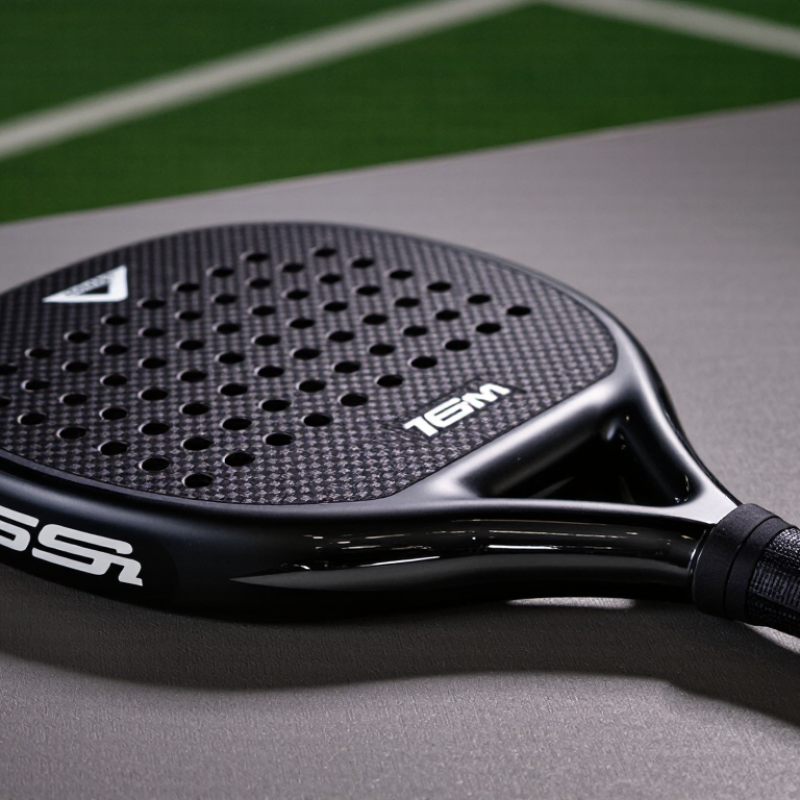
A 16 mm pickleball paddle has a core about 0.63 inches thick. That figure usually describes the paddle’s central core, not a required thickness under USA Pickleball rules. The finished paddle also has face layers, so its full panel may measure slightly differently. Construction varies. Check the maker’s specification rather than assuming every 16 mm model has identical dimensions.
USA Pickleball equipment standards focus on the paddle’s overall length and width, along with surface and performance requirements. The combined length and width cannot exceed 24 inches, and the paddle cannot be longer than 17 inches. A 16 mm core is not a rule-defined target. That distinction is easy to miss. A thicker core may feel steadier on soft shots, but feel alone does not confirm compliance or suitability.
Tips: Check the paddle’s current approval status before play. If comparing models, note whether each listing gives core thickness or total panel thickness. A simple caliper can show the finished panel measurement, but it cannot verify every equipment standard. I once assumed the printed number told the whole story; it didn’t.
| Buying Dimension | Verified Detail | What to Look For in a 16mm Paddle | Practical Buyer Check |
|---|---|---|---|
| What “16mm” means | 16 mm is approximately 0.63 in (0.6299 in before rounding). It refers to the paddle’s stated core thickness, not its length or width. | Compare the same listed thickness across models, while remembering that thickness alone does not determine feel or performance. | Check the product specifications to confirm that 16 mm describes the core or paddle profile as stated by the manufacturer. |
| USA Pickleball size limit | USA Pickleball equipment rules limit paddle length to 17 in and the combined paddle length and width to 24 in. | Choose a paddle whose finished dimensions meet the applicable equipment rules if you plan to play in sanctioned events. | Check the listed overall length and width; do not use core thickness as a substitute for either measurement. |
| Is thickness the rule’s size measurement? | No. The stated dimensional limits concern paddle length and width. The 16 mm core figure is a product specification, not the length-plus-width calculation. | Treat thickness as a buying preference and verify compliance using the paddle’s overall dimensions and current equipment requirements. | For tournament use, confirm the exact model appears on the current USA Pickleball approved paddle list. |
| Control-oriented feel | Core thickness is one design factor; materials, construction, shape, weight, and balance also affect how a paddle feels. | Try the paddle, if possible, with soft shots, blocks, and resets. A 16 mm label by itself does not guarantee a particular level of control. | Compare comfort and consistency using the same ball and similar shots rather than relying on thickness alone. |
| Power and swing feel | Overall weight, weight distribution, swing mechanics, and paddle construction influence the effort and response a player experiences. | Consider how the paddle feels during drives and overheads, as well as during quick exchanges at the net. | Review the listed weight and grip dimensions, then test the paddle if a retailer or demo program allows it. |
| Grip fit | Grip circumference and handle length vary by paddle. A comfortable fit depends on the player’s hand and preferred grip. | Look for a handle that feels secure without forcing the fingers into an uncomfortable position. | Check the manufacturer’s grip-size and handle-length specifications; use a demo to assess comfort. |
| Surface and construction | Surface material and paddle construction vary by model and can affect feel, durability, and play characteristics. | Read the construction details and warranty terms. Do not assume all paddles with a 16 mm core use the same materials or play alike. | Check care instructions, warranty coverage, and whether the surface remains compliant with current equipment rules. |
| Final selection | A suitable paddle balances comfortable handling, preferred feel, fit, construction, and rules compliance. | Use 16 mm as one filter—not as a complete ranking of paddle quality or suitability. | Before buying, verify overall dimensions, grip fit, weight, construction details, and current approval status when needed. |