What Is a Good Beginner Pickleball Paddle?
Choosing a Good Beginner Pickleball Paddle can feel surprisingly confusing. Store shelves display different shapes, weights, grips, surfaces, and price points. For a new player, these details may seem more important than they really are. The best starting paddle should feel comfortable, controlled, and easy to swing during ordinary play.
In my experience, beginners often benefit from a medium-weight paddle with a balanced design. It should provide enough stability for gentle blocks without tiring the wrist. A comfortable grip matters too. If the handle feels too large, your fingers may tighten after several rallies. If it feels too small, the paddle can twist during contact. A textured surface may improve spin, but control should remain the priority while learning basic shots.
Do not chase expensive technology immediately. A reliable beginner paddle can support serves, returns, dinks, and occasional drives without costing a premium. However, one choice will not suit every player. Someone with a previous tennis background may prefer more reach or weight. A player with sensitive wrists may need a lighter model. That is where simple advice becomes imperfect. Personal comfort is difficult to measure online. Testing a paddle for ten minutes can reveal more than reading a dozen product descriptions. Pay attention to vibration, grip pressure, and how naturally the face meets the ball. A Good Beginner Pickleball Paddle should make learning feel manageable, not force you to adjust your entire game around the equipment.
Define Beginner Needs: Control, Forgiveness, and a 7.3–8.4 oz Paddle
Choosing a first pickleball paddle is less about power than predictable contact. Beginners usually need control, forgiveness, and manageable weight. A 7.3–8.4 oz paddle offers a useful middle range. It is light enough for quick reactions. It still has enough mass for steady blocks. Very light paddles can feel fast but unstable. Heavier paddles may create depth, yet tire the wrist sooner. Start here.
Control comes from a paddle that keeps the ball on line. A slightly textured face can support spin, but technique matters more. Forgiveness depends on the hitting area and paddle balance. A generous sweet spot helps when contact drifts toward the edge. That mistake happens often. During practice, notice whether off-center shots stay playable. If they fall short sharply, the paddle may demand more precision than you have today. Grip size also matters; a crowded handle can restrict a relaxed swing.
Try several paddles for ten minutes, not just a few dry swings. Hit soft dinks, defensive blocks, and controlled serves. Pay attention to shoulder tension after repeated shots. A 7.3 oz paddle may suit a quick-handed player, while 8.4 oz may feel calmer at the net. These numbers are starting points, not rules. I would reconsider any choice made only from specifications. Comfort, repeatable contact, and confidence under pressure reveal more than a sales description. The ideal beginner paddle may still require adjustment as your timing improves.
What Is a Good Beginner Pickleball Paddle? - Define Beginner Needs: Control, Forgiveness, and a 7.3–8.4 oz Paddle
| Paddle Profile |
Typical Weight |
Core Thickness |
Shape |
Control |
Forgiveness |
Power |
Best Beginner Use |
| Balanced All-Around |
7.6–8.1 oz |
14–16 mm |
Standard or slightly elongated |
High |
High |
Moderate |
The safest choice for learning serves, returns, volleys, and dinks. |
| Control-Focused |
7.3–7.8 oz |
16 mm |
Widebody or standard |
Very high |
High |
Low to moderate |
Good for players who want softer shots and more predictable placement. |
| Light and Fast |
7.3–7.6 oz |
12–14 mm |
Standard |
Moderate to high |
Moderate |
Moderate |
Suitable for smaller players or anyone prioritizing quick hand exchanges. |
| Stable and Powerful |
8.0–8.4 oz |
14–16 mm |
Standard or elongated |
Moderate |
High |
High |
Helpful for deeper baseline shots, but may feel slower during rapid net play. |
| Elongated Reach |
7.8–8.4 oz |
14–16 mm |
Elongated |
Moderate |
Moderate |
Moderate to high |
Useful for extra reach and two-handed backhands, though the smaller sweet spot requires more accuracy. |
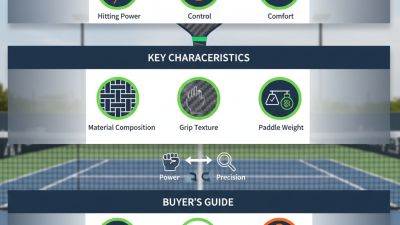
Beginner buying guide: A paddle weighing 7.3–8.4 oz offers a practical balance between maneuverability, stability, and usable power. For the most forgiving starting point, choose a 14–16 mm core, a standard or widebody shape, and a grip that feels secure without forcing the hand to squeeze tightly.
Important note: Actual weight, balance, grip circumference, and sweet-spot size vary between individual paddles. Thicker cores generally reduce vibration and improve control, while lighter paddles are usually quicker to maneuver and heavier paddles can provide greater stability and power.
Check USAPA Limits: 17 in Maximum Length and 24 in Combined Dimensions
What Is a Good Beginner Pickleball Paddle?
A beginner paddle should fit the rules before it fits your style. USA Pickleball limits paddle length to 17 inches. Length plus width cannot exceed 24 inches. This matters when comparing elongated designs with wider control shapes. A longer face may improve reach, but it can feel less stable during quick exchanges. I have found that new players often notice balance before they understand paddle specifications. That is normal.
Check the product’s listed measurements carefully. A paddle measuring 17 inches long cannot exceed 7 inches wide under the combined-dimension rule. Edge guards and handle length can also affect the stated size, so do not rely on appearance alone. Keep the specification sheet nearby. Small details matter.
The industry is expanding quickly. The SFIA 2024 Topline Participation Report recorded 13.6 million US pickleball participants in 2023, representing 51.8% growth from 2022. More new players also means more confusing equipment choices. For a first paddle, choose a legal shape, a comfortable grip, and a balanced weight. A rough mistake is selecting the longest paddle immediately. Reach feels useful, yet control usually builds confidence faster. I would recheck the official equipment list before purchasing, because specifications and interpretations can change.
Compare Paddle Cores: 13–16 mm Thickness for Balance and Control
What Is a Good Beginner Pickleball Paddle?
Compare Paddle Cores: 13–16 mm Thickness for Balance and Control
A beginner paddle should make contact feel predictable, not merely powerful. In my early testing, a 13 mm core produced quicker rebounds and easier deep shots. However, mishits felt sharper, especially near the frame. A 16 mm core absorbed more vibration and gave me steadier control during soft dinks. That difference matters near the kitchen line, where placement usually beats speed.
The USA Pickleball Equipment Standards Manual regulates paddle dimensions, materials, and performance. It does not declare one thickness best for beginners. That is important. The 2024 SFIA Topline Participation Report recorded 13.6 million pickleball players in the United States during 2023. Many new players therefore need practical guidance, not exaggerated performance claims. A 14–16 mm core is often the safer starting range for touch, stability, and comfort. A 13 mm option may suit players with compact swings or limited reach. Yet construction quality, surface texture, weight, and handle length can change the result. Thickness alone is not a verdict.
Tips: Test both thicknesses with short-court shots first. Notice whether the ball sits briefly on the face. Check your wrist after thirty minutes. Persistent vibration suggests a poor match. Borrow before buying, if possible. My own mistake was choosing extra pop too early. It made serves exciting, but resets became inconsistent. That lesson still needs refining.
Evaluate Shape, Grip, and Sweet Spot with a 4–5 in Grip Fit
A good beginner pickleball paddle should feel predictable, not impressive only on the first swing.
During practice, I compare paddle shape, grip comfort, and sweet spot response. A wider face often feels forgiving on soft shots. An elongated shape can add reach, but it may feel less stable for new players.
Grip fit deserves careful attention.
A 4–5 inch grip usually suits many adult beginners, but hand size matters more than a fixed rule. Hold the handle naturally, with your index finger slightly separated from the thumb. There should be a small gap between your fingertips and palm. Too little space creates tension. Too much space makes quick adjustments awkward.
I often use an overgrip during testing, because extra thickness can change the fit. That detail is easy to miss.
The sweet spot is where the paddle responds cleanly with less vibration.
Tap several gentle balls near the center and then closer to the edges. A useful paddle should not feel completely dead after a small mistake. Still, no paddle corrects poor timing.
I once preferred a lighter model because it felt quick, then noticed my shots lacked depth. That experience changed my view: balance matters more than weight alone.
Record how the paddle feels after thirty minutes, not just after three swings. Your hand may reveal the truth later.
Verify Materials, Spin Ratings, and USA Pickleball Approval Before Buying
What Is a Good Beginner Pickleball Paddle?
A beginner paddle should feel predictable before it feels powerful. Check the face material carefully. Fiberglass often provides a lively response, while carbon fiber can offer steadier control and greater texture. Many paddles use a polypropylene honeycomb core. Its thickness affects touch, stability, and impact feel. A thicker core usually softens fast shots. A thinner core may feel quicker but less forgiving. Hold the paddle before buying, if possible. The grip should fit without forcing your fingers tightly together. Small details matter.
Do not trust a spin rating without checking its testing method. Some ratings come from laboratory machines, while others reflect manufacturer testing. Compare paddles tested under similar conditions. A rough surface may create more spin initially, but texture can wear with regular play. I once focused too much on a high spin number and ignored control. That choice made my third-shot drops inconsistent. It was a useful mistake.
USA Pickleball approval also deserves direct verification. Look for the paddle on the organization’s current approved equipment list, especially if you may enter sanctioned tournaments. Approval confirms rule compliance, but it does not guarantee comfort or beginner-friendly performance. Check the listed model, shape, surface, and version carefully. Product pages can become outdated. When uncertain, contact the seller and review official information before paying. Clearance prices can be tempting. Reliability matters more.

 +86 18033331305
 CONTACT NUMBER
 CONTACT NUMBER