 +86 18033331305
Leave Your Message
-
CONTACT NUMBER
-
 CONTACT NUMBER
-
 CONTACT NUMBER
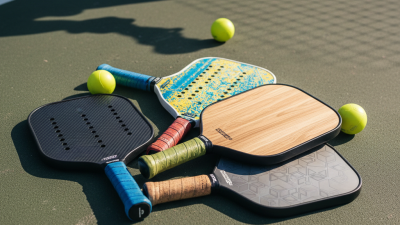
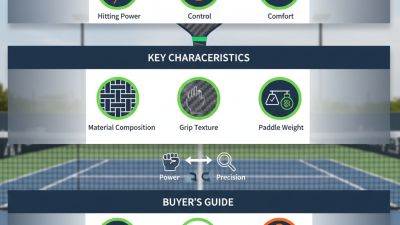
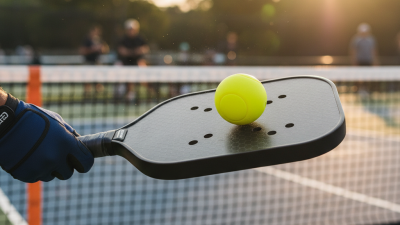
Choosing the China Best Professional Pickle Ball Manufacturer requires more than comparing prices. It demands evidence, product knowledge, and careful attention to manufacturing details. This guide explores how to identify a reliable supplier for Professional Pickle Ball equipment and related products.
A capable manufacturer should understand paddle balance, surface texture, core materials, edge protection, and ball durability. These details affect control, comfort, and performance during repeated play. Factory experience matters. So does consistent quality control.
Look for clear material specifications and practical testing records. Ask how paddles are inspected before shipment. A dependable supplier should explain production stages without vague promises. Certifications, export experience, and transparent communication also strengthen buyer confidence. However, documents alone cannot prove every claim. Samples still matter.
Feel the grip.
Check the finish.
Test the bounce.
A serious factory should support sample evaluation, packaging customization, and stable repeat orders. It should also respond clearly when a design needs improvement. Small details, such as protective film, carton strength, and logo accuracy, can reveal production discipline. These details are easy to overlook.
No manufacturer is flawless. Even experienced suppliers may face delays, material changes, or communication gaps. Honest companies acknowledge these risks and offer workable solutions. Buyers should therefore compare samples, production capacity, quality systems, and after-sales support together. The best choice is not always the cheapest one. It is the manufacturer that combines technical ability, consistent workmanship, and dependable cooperation over time.
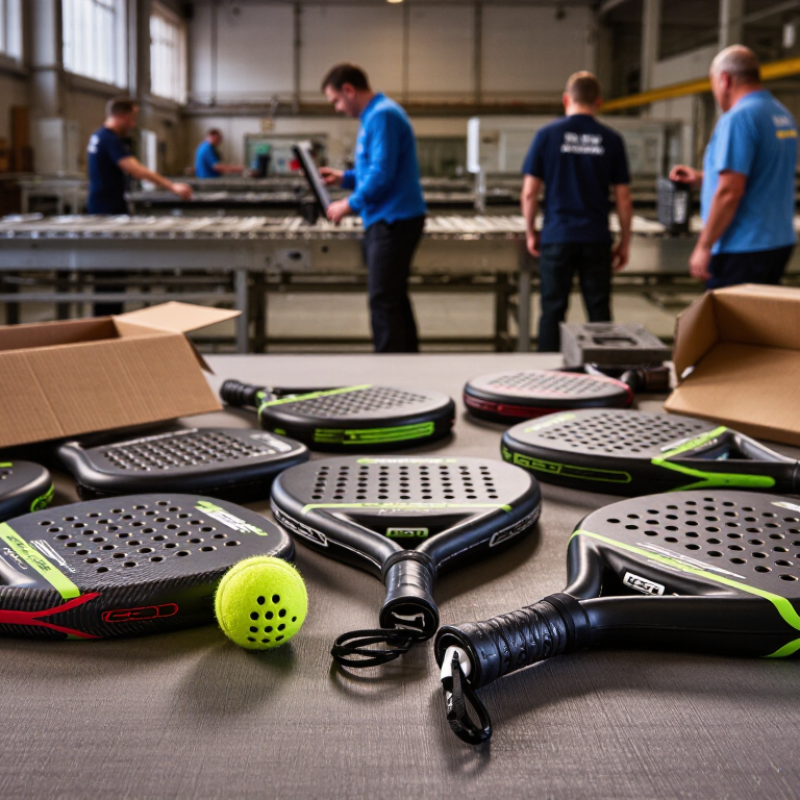
A professional pickleball manufacturer in China is defined by more than factory size or a polished catalog. Real expertise appears in repeatable processes, measurable testing, and honest communication. An experienced team understands how paddle cores, face materials, edge guards, and grip shapes affect play. It also studies different playing conditions, from humid coastal storage to dry indoor courts. Small details matter. A reliable factory should explain its material choices, production limits, and expected product lifespan without exaggerated claims.
Professional production begins with controlled sampling. Engineers should check paddle weight, balance, surface texture, and dimensional tolerance before mass production. For balls, they should measure roundness, bounce consistency, seam quality, and performance after repeated impacts. Quality records, batch codes, and documented inspections make problems easier to trace. I would also expect clear approval samples and a practical correction process when results miss the agreed standard. That experience is not always perfect. Even skilled teams can overlook a grip issue or packaging weakness during a busy season. The important question is whether they admit it, investigate it, and prevent a repeat.
Credibility grows through verifiable evidence, not impressive promises. A manufacturer should provide factory photographs, test reports, material specifications, and references from comparable projects when permitted. It should protect confidential designs and communicate realistic production schedules. Transparent answers about minimum order quantities, tooling, lead times, and after-sales handling reveal operational maturity. A professional partner listens to court feedback and adjusts prototypes with documented reasoning. That is where manufacturing skill becomes real product value.
| Evaluation Area | What a Professional Manufacturer Should Provide | What Buyers Can Verify |
|---|---|---|
| Product engineering | Clear specifications for paddle materials, core construction, surface finish, grip, edge protection, and ball design. | Request technical data sheets, construction details, drawings, and samples that match the proposed production specification. |
| Quality control | Documented inspection procedures covering incoming materials, production stages, and finished goods. | Ask for inspection criteria, sample inspection records, defect-handling procedures, and the method used to keep production consistent. |
| Product testing | Repeatable checks for relevant product characteristics, such as paddle dimensions and weight, grip fit, ball bounce, and durability. | Request dated test records and clarify the test method, sample size, acceptance criteria, and whether testing is performed in-house or by an independent laboratory. |
| Rules and market requirements | Awareness that equipment requirements differ by sport organization and sales market, with no unsupported claim that every product is approved. | Check the current requirements of the intended governing body or market. Verify any claimed approval directly in the relevant official listing or documentation. |
| Materials and sourcing | Traceable information about core, face, adhesive, grip, coating, and packaging materials, including any material substitutions. | Request material specifications and written change-control terms. Confirm that samples and mass-production goods use the agreed materials. |
| Production capability | Equipment, skilled operators, and production planning suited to the requested product and order volume. | Review a factory profile or arrange an audit. Ask for process steps, realistic capacity data, and the production schedule for a trial order and repeat order. |
| Customization and tooling | Defined options for artwork, colors, grip, packaging, and product specifications, with clear ownership and approval procedures for custom tooling. | Obtain written artwork proofs, a pre-production sample, tooling terms, and confirmation that production will follow the approved sample. |
| Order consistency | A documented process for matching bulk production to the approved sample and specification. | Agree on a reference sample, measurable acceptance criteria, and a pre-shipment inspection plan before placing the order. |
| Packaging and shipping | Packaging designed to protect paddles and balls in transit, with carton details suited to the shipping method. | Confirm packaging specifications, carton dimensions and weight, labeling needs, and who handles export documentation and freight arrangements. |
| Communication and after-sales support | Timely written responses, clear order updates, and a defined process for handling defects or specification discrepancies. | Confirm response contacts, inspection and claim timelines, required evidence for claims, and the agreed remedy process in writing. |
Buyer note: No single checklist item proves that a supplier is the “best.” Compare suppliers using the same specifications, samples, inspection criteria, and delivery terms; verify certifications and approval claims with the issuing organization.