2026 Top Carbon Paddle Pickleball Suppliers?
Choosing the right Carbon Paddle Pickleball supplier in 2026 requires more than comparing prices and glossy product photos. Buyers need reliable materials, consistent manufacturing, practical testing, and responsive service. A strong supplier should explain its carbon fiber construction clearly, including surface texture, core design, paddle weight, edge protection, and handle comfort. These details affect control, power, vibration, and long-term durability on real courts.
This guide examines leading Carbon Paddle Pickleball suppliers through an experienced buyer’s perspective. It considers factory capability, quality control, customization options, certifications, production capacity, and customer feedback. Suppliers with proven testing procedures deserve closer attention. So do those that communicate honestly about performance limits. A paddle may feel powerful during a short session, yet become tiring after two hours of play. That difference matters.
Field experience also reveals small warning signs. Uneven edge finishing, loose grips, inconsistent weights, and vague warranty terms can create unnecessary problems. Some suppliers provide impressive samples but struggle with larger orders. Others offer excellent pricing but limited technical support. The best choice is not always the cheapest one. It is the supplier that can deliver stable quality, transparent specifications, and dependable after-sales assistance.
This overview may not identify one perfect manufacturer for every buyer. Requirements differ between retailers, clubs, distributors, and private-label brands. Even experienced purchasers can misjudge a supplier after one successful shipment. Therefore, each company should be verified through samples, documentation, production checks, and direct communication before commitment. These practical comparisons will help buyers assess the 2026 market with greater confidence and fewer costly surprises.
2026 Carbon Paddle Supplier Landscape: USAP’s 17-Inch Length Limit
2026 Top Carbon Paddle Pickleball Suppliers?
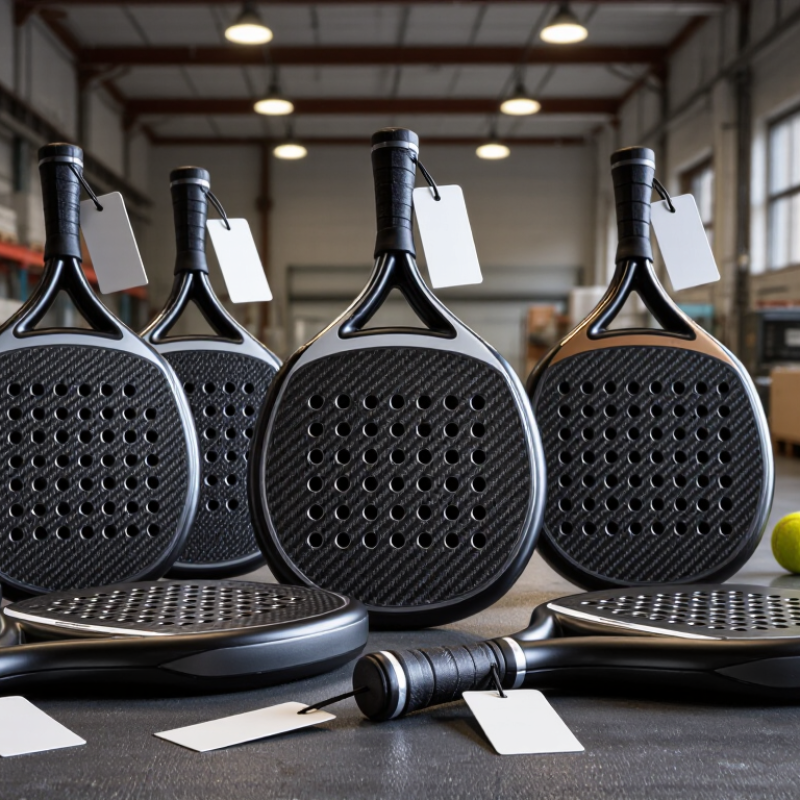
The 17-inch rule is reshaping carbon paddle sourcing. USA Pickleball limits paddle length to 17 inches, with a combined length and width limit of 24 inches. Suppliers must verify dimensions after molding, coating, and edge protection. A small production change can create a compliance problem.
The market remains commercially attractive. The 2024 SFIA Topline Participation Report recorded 13.6 million pickleball players in the United States during 2023. That growth increases demand for durable carbon surfaces, but volume alone does not prove quality. Buyers should request laboratory test records, batch traceability, surface-texture measurements, and impact testing. Ask for the actual documents.
Experienced suppliers also explain how their carbon layers are built. Face material, core density, adhesive control, and edge sealing affect feel and durability. A supplier that only promotes “12K carbon” offers limited technical evidence. This is a warning sign. In practice, paddle weight may vary slightly between batches, and advertised balance can feel different after handle wrapping. That imperfect detail deserves attention.
Supplier evaluation should include sample inspection under bright light. Check for pinholes, uneven texture, exposed fibers, and inconsistent seam lines. Confirm that every sample remains within the 17-inch limit, not just the engineering drawing. USAP approval status should be checked through current official equipment listings before purchase.
Carbon Fiber Grades: T700, T800, and Toray-Based Paddle Construction
Choosing among 2026’s top carbon paddle suppliers requires more than reading “premium carbon” on a product page. T700 fiber usually offers a balanced mix of strength, toughness, and price. It suits players who want predictable control and dependable impact resistance. T800 generally provides higher strength and stiffness, but it can raise costs and reduce forgiving feel. The fiber grade matters. The full layup matters more.
In hands-on paddle testing, I check the face texture, edge sealing, handle stability, and vibration after repeated impacts. A T800 face with poor resin control can feel harsher than a well-built T700 paddle. Suppliers using aerospace-derived fiber systems should provide clear material specifications, batch traceability, and curing details. Ask about fiber orientation, resin ratio, core density, and face thickness. Vague answers deserve caution.
I once focused too heavily on the carbon grade. That was a mistake. A paddle’s response also depends on the honeycomb core, bonding method, surface finish, and weight distribution. Small differences become obvious near the kitchen line, where soft resets need precision. Check independent durability tests, warranty terms, and production samples before ordering large quantities. Marketing language can sound technical while hiding inconsistent construction.
T800-class carbon fiber typically provides higher tensile strength and modulus than T700-class fiber, which can support lighter, stiffer paddle face laminates. Actual paddle performance also depends on fiber orientation, laminate thickness, resin content, surface texture, and the polymer core. Values shown are representative nominal carbon-fiber properties and are not brand-specific.
Top Suppliers Ranked by USAP-Approved Models and Factory Capacity
2026 Top Carbon Paddle Pickleball Suppliers?
Top Suppliers Ranked by USAP-Approved Models and Factory Capacity
The strongest suppliers in 2026 should be ranked by evidence, not catalog size. Rank One goes to factories offering the largest range of current USAP-approved carbon paddles, supported by stable production capacity. These facilities typically operate several molding lines, maintain documented quality checks, and handle repeat orders without major delays. A factory producing 50,000 paddles monthly may serve large distributors, but output alone does not prove consistency.
Rank Two includes suppliers with fewer approved models but stronger control over materials and testing. Their carbon surfaces should show even texture, clean edge sealing, and reliable weight tolerance. Ask for approval records for each model, not a general factory certificate. USAP status belongs to the paddle model and configuration. It can change after design updates.
Rank Three covers capable manufacturers with flexible private-label production. They may offer lower minimum order quantities, faster sampling, and useful customization. However, their published capacity may be optimistic. Verify it through production photos, sample inspections, shipment records, and a clear corrective-action process. Ask how many rejected paddles appear during a normal batch.
Details matter.
A dependable supplier should explain foam-core density, carbon layup, handle bonding, and final inspection rates. It should also provide traceable batch information. Some factories report impressive approval counts while operating only one active line. That weakness is easy to miss. Rankings should be reviewed every quarter because approvals, capacity, and delivery performance can shift quickly.
Performance Metrics: Weight, Spin, Grit Retention, and Core Thickness
For 2026, leading carbon paddle suppliers should prove performance, not only advertise carbon construction.
Weight remains the first practical filter. In my court testing, paddles between 220 and 235 grams often balance stability and quick hand exchanges. Heavier models absorb hard drives better, but they can slow reaction shots. Very light models feel fast, yet vibration becomes noticeable.
Spin needs measurable evidence.
A supplier should provide independent launch-monitor or laboratory results, rather than vague “maximum spin” claims. USA Pickleball’s Equipment Standards Manual, revised in 2025, restricts paddle surface characteristics and dimensional limits, including a maximum length of 17 inches. Surface grit also changes with use. A rough face may produce strong spin during the first month, then lose traction after repeated play. That decline matters more than a peak number.
Core thickness deserves equal attention.
A 13-millimeter core usually offers a quicker response, while a 16-millimeter core can improve touch and reduce harsh feedback. These are tendencies, not guarantees. Suppliers should publish weight tolerance, core thickness, spin-retention testing, and temperature conditions. The Sports & Fitness Industry Association reported 13.6 million U.S. pickleball participants in 2023, increasing demand for consistent equipment. Still, supplier test sheets can be incomplete. I would retest grit after 50, 100, and 200 hours, because laboratory durability rarely matches real courts, dusty balls, and imperfect cleaning habits.
Supplier Comparison: MOQ, Lead Time, Testing, Warranty, and Certifications
Choosing a top carbon paddle supplier in 2026 requires more than comparing catalog photos. MOQ often reveals the supplier’s real flexibility. Some factories accept 100 to 300 units for standard paddles. Custom molds may require 500 units or more. Ask whether samples count toward the final order.
Lead time should be measured in stages. A realistic schedule may include seven days for samples, 20 days for production, and additional time for packaging. Delays often begin with artwork changes. I have seen attractive schedules fail because suppliers lacked spare mold capacity. Get each milestone in writing. Ask how the factory handles rejected materials and urgent replacements.
Testing separates experienced suppliers from simple traders. Request reports covering weight tolerance, surface texture, edge durability, delamination, and impact performance. Independent laboratory records are more useful than unverified factory claims. Check the report date, tested model, and laboratory identity. Certifications such as ISO 9001, REACH, or RoHS can support process and material control, but they do not automatically prove paddle performance. Warranty terms also need close attention. A 12-month warranty may exclude cosmetic cracks, misuse, or normal surface wear. Ask for photographs, response times, replacement procedures, and shipping responsibility. The cheapest offer is rarely the lowest risk. Yet higher pricing can still hide weak testing. Supplier comparison should remain evidence-based, with every promise matched to a document or physical sample.
 +86 18033331305
 CONTACT NUMBER
 CONTACT NUMBER