 +86 18033331305
Leave Your Message
-
CONTACT NUMBER
-
 CONTACT NUMBER
-
 CONTACT NUMBER
Pickleball’s rapid growth has raised the bar for serious players choosing a paddle. The Sports & Fitness Industry Association reported 13.6 million U.S. participants in 2023, a 51.8% increase from 2022. That figure offers useful context, though it does not tell you which paddle will improve your game. Your playing style matters more.
This guide to the best Professional Pickle Ball paddles in 2026 focuses on details you can feel during play: weight in your hand, grip comfort, surface texture, and control on soft shots. A heavier paddle may add pace, while a lighter model can feel quicker at the kitchen line. Neither is automatically better. Small differences matter. So does a handle that fits your grip without forcing your wrist into an awkward angle.
We also consider paddle construction and stated specifications, while recommending that buyers check current approval status with USA Pickleball when tournament eligibility matters. Manufacturer claims can be useful, but they are not independent test results. That distinction is easy to overlook. Our comparisons aim to make trade-offs clear rather than promise a perfect paddle. Before buying, consider your budget, match level, and whether you value touch, power, or a balanced feel. A paddle that looks impressive on paper may still feel wrong after a few rallies.
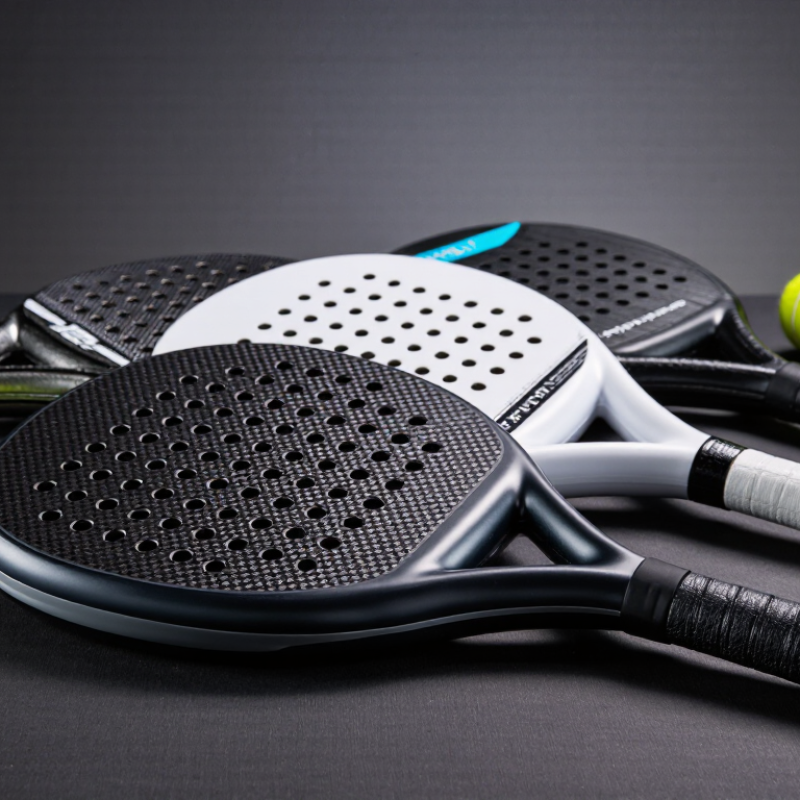
What Defines a Professional Pickleball Paddle in 2026?
A professional pickleball paddle is not defined by price or a “pro” label. It must meet the current equipment rules and suit a player’s control, power, and feel. USA Pickleball’s equipment specifications set a maximum combined paddle length and width of 24 inches, with length capped at 17 inches. The rules do not set a maximum paddle weight. That leaves room for different builds, but a heavier paddle can feel tiring during quick exchanges.
Surface and construction matter, too. USA Pickleball’s equipment standards assess features such as surface roughness and paddle deflection, helping ensure that texture or flexibility does not create an unfair advantage. In play, a reliable paddle gives consistent contact across its face. A clean, firm pop is useful. So is a handle that stays comfortable when your palm gets damp. Small details. Big difference. Still, no specification can tell you whether a paddle feels right in your hand.
Tips: Check the current USA Pickleball approved-paddle list before buying for sanctioned play. Test the grip with your usual overgrip, and compare several weights if possible. Look for stable response on both soft dinks and hard drives. One honest caveat: lab compliance does not guarantee confidence on court.
What Defines a Professional Pickleball Paddle in 2026?
| Dimension | Professional-Level Benchmark | Why It Matters | What to Check |
|---|---|---|---|
| Competition legality | The paddle must meet the rules and approval requirements of the competition organizer. | A paddle that is not approved for an event may not be used, regardless of its performance. | Check the current equipment rules and approved-paddle listing for the specific event. |
| Overall dimensions | Under USA Pickleball equipment specifications, combined length and width may not exceed 24 in (60.96 cm), and paddle length may not exceed 17 in (43.18 cm). | Shape affects reach, leverage, and the balance between hitting area and maneuverability. | Confirm measurements and applicable rules; other competition authorities may have their own requirements. |
| Weight | Many performance paddles are approximately 7.5–8.5 oz (213–241 g); this is a common market range, not a universal professional standard. | More mass can feel stable on impact; less mass can be easier to maneuver during quick exchanges. | Compare actual weight, including any added tape or grip, and choose what you can control comfortably. |
| Core and thickness | Polymer honeycomb cores and roughly 13–16 mm core thickness are common in current performance-paddle designs; neither is a universal requirement. | Core design and thickness influence feel, stability, touch, and how the paddle responds to impact. | Treat thickness as one factor, not a guaranteed measure of power or control. |
| Face material and texture | Composite faces, including carbon-fiber and fiberglass constructions, are widely used. Surface texture and performance must comply with the relevant rules. | Face construction affects feel and ball interaction; a material label alone does not establish spin or quality. | Look for rule-compliant construction and evaluate the paddle through play rather than relying only on marketing terms. |
| Grip size and handle | Handle circumference around 4.0–4.5 in (10.2–11.4 cm) is a common retail range, with variation across players and paddle designs. | A comfortable grip supports secure handling and quick adjustments without excessive squeezing. | Check circumference, handle length, and grip shape; overgrips can change the final fit. |
| Balance and maneuverability | There is no single ideal balance point; the right choice depends on swing feel, playing style, and individual comfort. | A paddle that feels quick at the net may feel different from one that favors reach or a heavier swing. | Test volleys, resets, and groundstrokes where possible; consider balance as well as total weight. |
| Durability and build | Inspect the face, edge protection, handle, and overall construction. Build methods vary, and no one construction feature guarantees durability. | Consistent construction helps the paddle retain a dependable feel through regular use. | Review the maker’s warranty and care guidance, and check the paddle regularly for damage. |
| Best overall selection principle | There is no universally best professional paddle. Prioritize event legality, a comfortable grip and swing weight, suitable dimensions, and a feel that matches your game. | ||
Note: Weight, thickness, grip size, and construction ranges above describe common design choices, not mandatory specifications. Always verify the current rules for the event you plan to play.