2026 How to Set Up a Pickleball Net Efficiently?
Pickleball has rapidly gained popularity over recent years, making it one of the fastest-growing sports in the U.S. According to the Sports & Fitness Industry Association, over 4.2 million players participated in pickleball in 2021, a staggering growth of 39% from the previous year. As more players flock to courts, the demand for efficient Pickleball Net Set Up becomes crucial for optimal play.
Setting up a pickleball net effectively can significantly impact game dynamics. An improperly set net can lead to frustration and hinder performance. The standard height for a pickleball net is 36 inches at the sidelines and 34 inches at the center. Using proper tools and techniques can streamline the setup process. However, not everyone has experience with this, leading to common mistakes.
Many players overlook the importance of a balanced and taut net. This can affect ball bounce and player experience. Research indicates that even minor misalignments in net tension can alter gameplay. Thus, understanding how to set up your pickleball net correctly is paramount for both casual and competitive play. With attention to proper procedures, you can enhance your game and enjoy this exhilarating sport to its fullest.
Understanding Pickleball Net Requirements and Specifications
When setting up a pickleball net, understanding requirements is crucial. The official height for the net is 36 inches at the sidelines and 34 inches at the center. This ensures proper game play and fairness in matches. Use a measuring tape to verify height precisely. A height discrepancy can affect game flow and player performance.
The net should be made of durable material that can withstand various weather conditions. Opt for a net with a strong mesh, capable of handling frequent use. Pay attention to the net's tension as well; a slack net can lead to faulty gameplay. Each setup should include at least two sturdy poles, firmly anchored in the ground. Stability is essential to create a safe playing environment.
One common oversight is neglecting the distance from side boundaries. The net must be positioned correctly to allow for proper clearance on both sides. Take time to assess the area before starting. A poorly placed net can diminish enjoyment for players. Check your net regularly for wear and tear, and be ready to replace it when necessary.
2026 How to Set Up a Pickleball Net Efficiently?
This chart represents the average heights of Pickleball nets according to various categories, illustrating the importance of adhering to specifications when setting up the net.
Choosing the Right Pickleball Net for Your Setup
Choosing the right pickleball net is crucial for an enjoyable game. Different nets serve different purposes. A portable net is ideal for recreational players. It’s easy to set up and move, making it perfect for casual play. For a more permanent setup, consider a net with a heavier frame. This ensures stability during windy conditions.
Tips: Always check the height of the net before you play. Regulation height is 36 inches at the ends and 34 inches in the center. An adjustable net is a smart investment. It caters to different skill levels and preferences.
In selecting net materials, think about durability. A high-quality net should withstand outdoor elements. Mesh nets resist wear and tear better than lower-quality options. Reflect on your playing environment. If you often play in windy areas, a sturdy net with reinforced edges can be beneficial. Proper net tension also matters. An improperly set net can lead to frustrating games. Check the tension before each match to ensure fair play.
2026 How to Set Up a Pickleball Net Efficiently? - Choosing the Right Pickleball Net for Your Setup
| Net Type |
Height (inches) |
Material |
Weight (lbs) |
Portability |
| Standard Pickleball Net |
36 |
Nylon |
20 |
Moderate |
| Portable Pickleball Net |
34 |
Aluminum |
15 |
High |
| Heavy-Duty Pickleball Net |
36 |
Polyester |
25 |
Low |
| Adjustable Height Net |
30-36 |
Steel |
22 |
Moderate |
| Tournament Net |
36 |
High-Density Polyethylene |
30 |
Very Low |
Step-by-Step Guide to Assembling the Pickleball Net
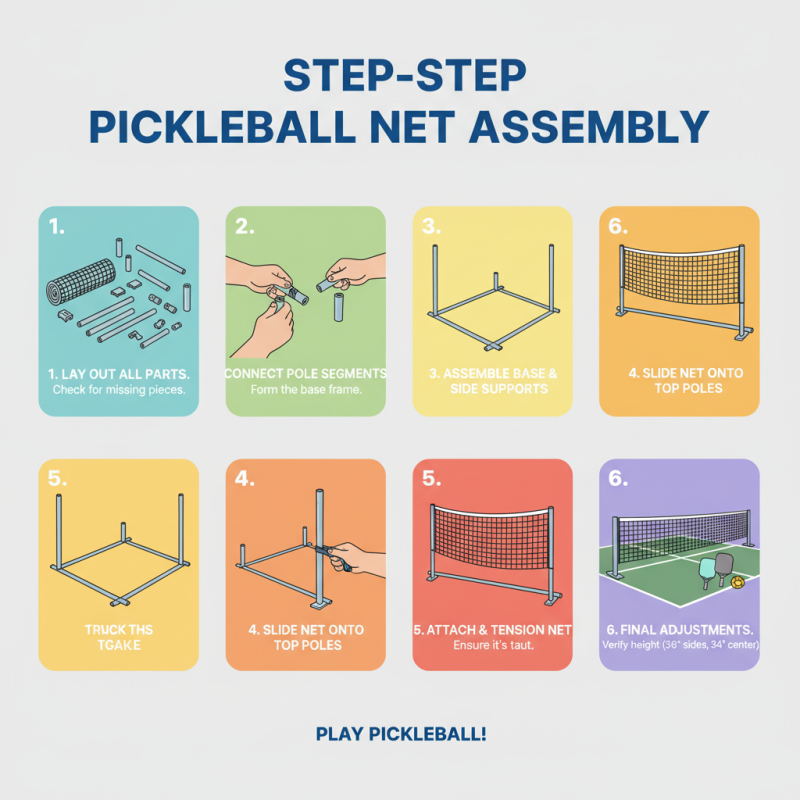
Assembling a pickleball net can be straightforward, but it requires some attention to detail. Start by laying out all parts. This includes the net, poles, and any connectors. Check for any missing pieces. It’s frustrating to realize you lack a component halfway through.
Position the poles upright. Use a level if necessary to ensure they are straight. An uneven setup can lead to problems later. Attach the net to one pole first, securing it tightly. Then, move to the opposite side. Use the tension to keep the net firm. A loose net can impact gameplay, making rallies less enjoyable.
Regularly inspect your setup, especially if you take it down frequently. Over time, wear can affect the net’s integrity. Adjustments may be required, and being proactive can save you time in the long run. Reflecting on your setup process can reveal areas for improvement, ensuring each game is set up perfectly.
Techniques for Properly Tensioning the Pickleball Net
Setting up a pickleball net requires attention to detail, especially regarding the tensioning. Proper tensioning ensures fair play, which is essential for an enjoyable game. Studies show that a net pulled too tight may distort the playing surface. Conversely, a loose net can lead to inconsistent ball bounces. Aim for a net tension that provides a comfortable playing experience.
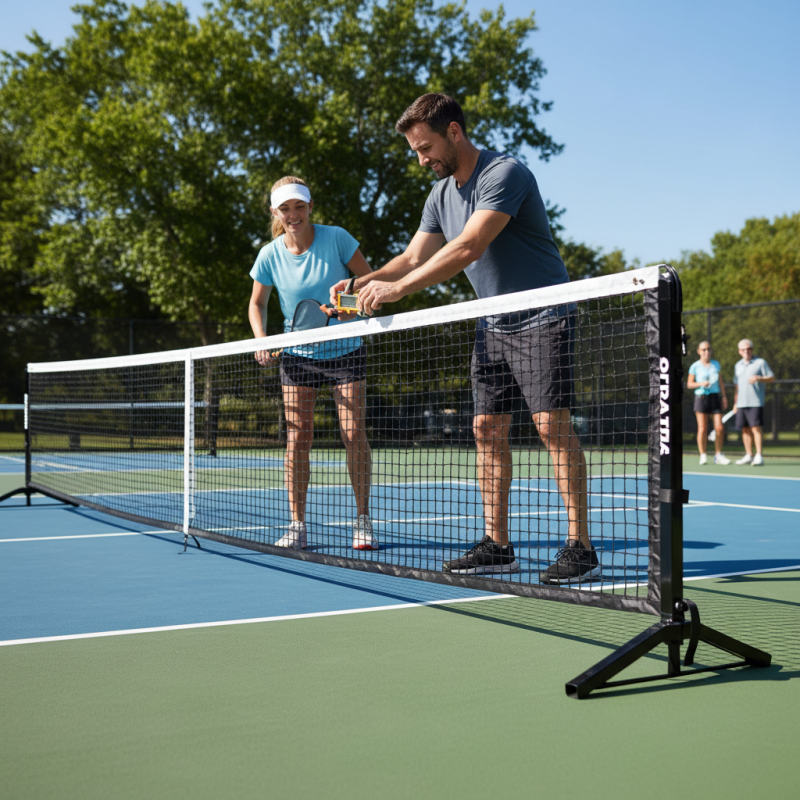
To achieve the right tension, check the net height at the center. The official height is 34 inches. You may need measurements around the net's edges to ensure a true tautness. Tips include using a tension gauge, as it provides a numeric value for accuracy. Many amateur players overlook this step, assuming visual inspection is sufficient. This can lead to frustration during matches where net standards are not met.
After adjusting the tension, test it with a few serves. Observe how the ball reacts when hitting the net. Is there a noticeable difference in how it bounces back? If not, reevaluate the tension. This process is not always perfect; it may take multiple tweaks to find the ideal setup. Regular adjustments based on experiences and feedback can refine your technique.
Safety Considerations While Setting Up the Pickleball Net
Setting up a pickleball net requires careful attention to safety. Ensuring a stable, secure environment is essential. First, choose a flat area free from obstructions. Look for hazards like rocks, uneven ground, or other sports equipment nearby. A smooth surface minimizes the risk of tripping.
Properly handling equipment is crucial. When unpacking the net, ensure it does not have sharp edges or broken parts. Injuries can happen if you're not cautious. Always check the components before assembly. Use gloves if necessary to avoid cuts. If possible, involve a partner when setting up, as this can prevent strain or accidents.
It’s not uncommon to overlook minor details. For instance, securing the net tightly is important. If it’s loose, it can lead to unexpected falls during gameplay. After assembly, walk around to spot any potential issues. Reflect on the setup process to improve your technique for next time. Preparing a safe environment can enhance the enjoyment and longevity of your pickleball sessions.

 +86 18033331305
 CONTACT NUMBER
 CONTACT NUMBER