+86 18033331305


Importing a carbon pickleball paddle is not simply a matter of choosing the darkest surface or the lowest factory price. Buyers must examine materials, construction, testing records, packaging, and long-term supplier reliability. The right decision begins with evidence, not attractive product photos.
Ben Johns, a professional pickleball player and paddle designer, has often emphasized a practical equipment principle: “The best paddle is the one that fits your game.” For importers, that idea deserves wider attention. A paddle that performs well for an aggressive tournament player may feel unsuitable for recreational customers. Carbon Paddle Pickleball products can differ in surface texture, core density, handle length, balance, and durability. Small changes can affect control, spin, and customer satisfaction.
This guide presents seven buying tips for importers. It covers carbon surface types, honeycomb cores, thermoformed construction, edge protection, grip quality, factory quality control, and required product documentation. Importers should request physical samples and test several batches. Do not trust one sample completely. That mistake is common. A supplier may change resin, core material, or finishing methods without making the difference obvious. Comparing weight, thickness, rebound, surface grit, and handle comfort creates a clearer purchasing record. Landed cost also matters, including freight, inspection, packaging, and possible warranty claims. Some recommendations may need adjustment after real customer feedback. That is not failure. It is part of responsible product evaluation.
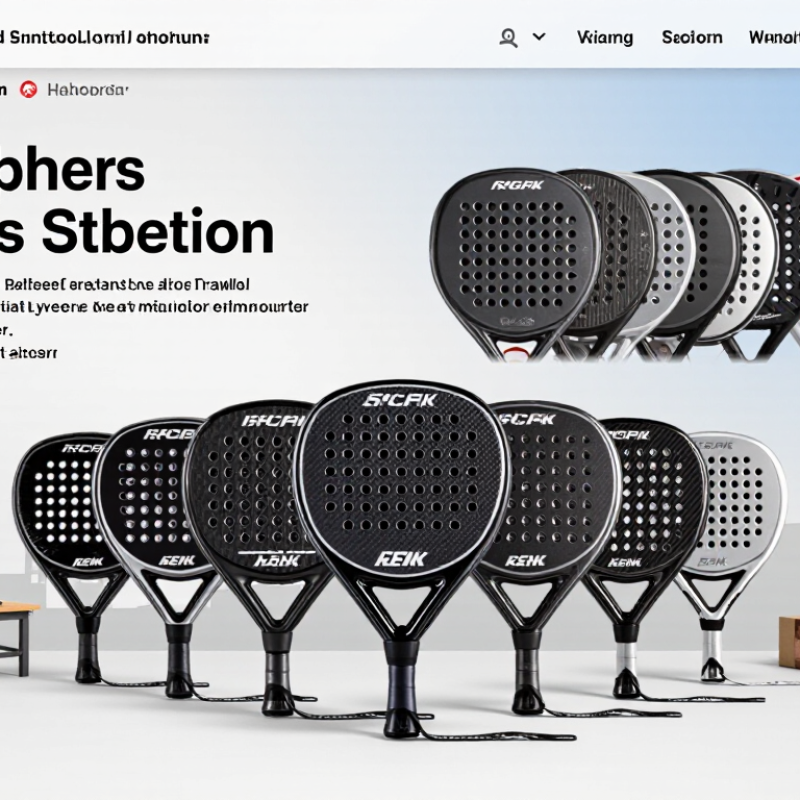
For importers, carbon selection starts with a clear distinction: 3K describes the fabric pattern, while T700 usually describes the fiber grade. They are not interchangeable terms. A visible 3K weave can improve surface appearance and stiffness, but it does not prove the entire paddle uses premium carbon. Ask for layup drawings, fiber orientation, resin details, and production samples. Small changes matter.
Core thickness changes the playing character. A 13 mm core usually feels quicker and more direct during fast exchanges. It may suit aggressive players, but vibration can feel sharper. A 16 mm core often provides a softer response, steadier control, and better comfort on long practice sessions. The trade-off is possible weight and slower hand speed. A 15 mm core can be a practical middle option, though results depend on foam density and compression.
I once compared two paddles with identical listed thickness. Their rebound was noticeably different. The core density and bonding process explained more than the specification sheet. This is where my buying checklist was too simple.
For each sample, record weight, balance point, surface texture, edge protection, and sound after repeated impacts. Request batch testing, not only one inspection unit. Check whether the carbon covers the hitting area consistently. Ask for performance data after heat and humidity exposure. It costs more time, but vague carbon claims can create expensive returns. Too much confidence is risky.
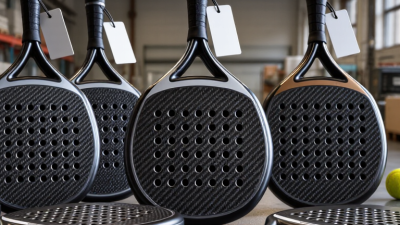
For importers, paddle dimensions are not a minor specification. The current USA Pickleball equipment limit allows a maximum length of 17 inches. Length plus width must not exceed 24 inches. This combined-size rule is easy to overlook when a supplier lists only the length.
Measure the finished paddle. Include the edge guard and butt cap. Use a rigid ruler for length and width, then record both measurements in a product inspection sheet. Measure the sample on a flat surface. Do not rely only on CAD drawings or factory descriptions. Measure the finished item.
Small differences can create problems. A paddle measuring 17 inches long should not be paired with a width that pushes the total above 24 inches. Ask the factory for a dimensioned drawing, a production sample, and written confirmation of the measurement method. Keep dated photos beside the ruler. I have seen specifications change after tooling adjustments, especially around thick edge guards. That detail is often missed. It deserves another check.
Build a small buffer below the limits, but do not assume any informal tolerance is accepted. Confirm the latest official equipment rules before mass production. An independent pre-shipment inspection can compare several paddles, not just one. If results vary, pause approval and investigate the mold, finishing process, and measuring tools. A cheap inspection is better than discovering nonconforming stock after delivery.
| No. | Buying Dimension | Verified Technical Requirement or Practical Benchmark | How to Verify Before Bulk Import | Recommended Importer Action |
|---|---|---|---|---|
| 1 | Overall Paddle Length | The total paddle length, including the handle and butt cap, must not exceed 17 inches (43.18 cm) for USA Pickleball equipment compliance. | Measure a production sample from the end of the butt cap to the furthest point of the paddle head. Do not measure only the carbon face. | Add a dimensional inspection to the purchase specification and allow for manufacturing tolerance without exceeding the limit. |
| 2 | Combined Length and Width | The paddle's length plus its maximum width must not exceed 24 inches (60.96 cm). For example, a 16-inch paddle can be no wider than 8 inches under this combined-size rule. | Record the maximum head width, add it to the measured overall length, and compare the result with 24 inches. | Require the supplier to provide a dimensional drawing showing overall length, maximum width, and the calculated combined size. |
| 3 | Carbon Face Construction | “Carbon” can refer to carbon-fiber fabric, carbon-reinforced composite, or a carbon-textured surface. The term alone does not establish fiber type, percentage, thickness, or playing characteristics. | Request a material declaration, face-layer construction diagram, fabric specification, resin information, and a sample for visual and physical comparison. | State the required face material and layer sequence in the technical purchase order instead of relying only on the word “carbon.” |
| 4 | Surface Texture and Finish | The hitting surface should be smooth and free from features designed to impart excessive spin or provide a mechanical advantage. Printed graphics and ordinary surface texture should not create prohibited irregularities. | Inspect samples under consistent lighting, compare the surface with the approved reference sample, and request compliance documentation when a paddle is intended for sanctioned play. | Include limits for surface uniformity, coating consistency, exposed fibers, sharp edges, delamination, and decorative protrusions. |
| 5 | Weight and Balance | USA Pickleball does not prescribe one universal paddle weight for all paddles. Weight and balance affect handling, swing effort, stability, and user preference. | Weigh a statistically meaningful sample using a calibrated scale and measure balance consistently from the butt end. | Specify a target weight range and tolerance, such as a declared range appropriate to the intended market, and approve both light and heavy samples before production. |
| 6 | Core and Structural Quality | Common paddle cores use polymer honeycomb materials, while carbon face layers are bonded to the core. Core thickness, bonding quality, edge protection, and flatness strongly influence durability. | Check sample thickness, face flatness, edge-guard adhesion, handle attachment, visible voids, soft spots, and abnormal sounds after controlled impact testing. | Define acceptance criteria for thickness tolerance, compression or impact testing, adhesive coverage, edge alignment, and cosmetic defects. |
| 7 | Documentation and Final Compliance Control | A compliant size is only one part of product approval. Paddle markings, construction, surface condition, and production consistency should match the approved specification. | Keep the signed technical drawing, material declaration, inspection report, approved sample, packaging artwork, and batch records together. | Conduct pre-shipment inspection on finished goods and retain samples from each production lot for traceability and possible compliance review. |
| Measurement note: Use the finished paddle, including the handle and butt cap, for overall length. Use the paddle’s maximum width when calculating length plus width. Always confirm the latest applicable equipment specifications and approval procedures before making compliance claims for organized play. | ||||
For importers, a 7.3–8.5 oz carbon paddle offers a practical performance window. Lighter models can improve hand speed, while heavier models add stability against hard returns. SFIA’s 2024 Topline Participation Report recorded 13.6 million U.S. pickleball players in 2023. That growth increases demand for clearly defined, repeatable specifications.
Static weight alone is not enough. Set a factory target, then measure balance and swingweight separately. A useful buyer range is 235–250 mm balance distance from the handle butt. For swingweight, 110–125 kg·cm² can support both quick exchanges and controlled drives. These figures are sourcing benchmarks, not official limits. USA Pickleball’s Equipment Standards Manual focuses on dimensions, surface features, and performance testing, rather than prescribing a paddle weight. Ask suppliers for test records from calibrated equipment. Check at least ten samples per production batch. A tolerance of ±0.1 oz is a sensible starting point, although some factories may struggle to hold it consistently.
Carbon layers, edge guards, handle foam, and grip size can shift the balance noticeably. Two paddles with identical weights may swing very differently. A clean spreadsheet can still mislead. Request the balance point and swingweight on the same sample. Also test dry and wrapped-grip conditions. That detail matters for final buyers. In practice, the 8.2 oz model may feel faster than the 7.8 oz model when its mass sits closer to the handle. Some targets will need revision after player testing; procurement data should not replace real swings.
For importers, spin claims need measured evidence, not showroom language.
The SFIA 2024 Topline Participation Report recorded 13.6 million U.S. pickleball participants in 2023. That growth increases scrutiny on paddle consistency and service life. Request surface-texture data from production batches, including roughness readings, coating thickness, and spin results against the same ball type. A smooth sample can pass visual inspection yet lose grip after repeated play.
Test spin before and after abrasion cycles. Record launch speed, rotation rate, temperature, and ball condition. There is no single universal spin number for every paddle, so compare identical samples under one controlled method. Use at least three paddles per batch. More is better. USA Pickleball equipment requirements also limit surface features that materially influence ball behavior, so importers should review compliance records beside laboratory results. Do not trust one impressive prototype.
UV exposure deserves separate testing. ASTM G154 provides a recognized method for accelerated ultraviolet and moisture exposure. Compare exposed panels with unexposed controls, then check gloss, texture, color, bonding, and spin retention. A practical program might include 100, 250, and 500-hour checkpoints, but those hours do not equal a fixed outdoor lifetime. That assumption is weak. Keep photos and QC sheets for every checkpoint. In my experience, suppliers often report average values while hiding the spread between samples. Ask for minimum, maximum, and standard deviation data. Surface texture, not appearance alone, decides whether performance survives the warehouse, transport, and court.
Demand is real, but volume can hide costly mistakes. The SFIA 2024 Topline Participation Report recorded 13.6 million U.S. pickleball players in 2023. Importers should translate that demand into cautious purchasing. Ask for production samples, confirm the exact paddle surface, edge guard, grip size, and packaging. Then compare the factory’s MOQ with your three-month sales forecast. A smaller pilot order may cost more per unit, yet it can protect cash flow.
Control the landed cost before signing. Under ICC Incoterms 2020, responsibilities for freight, insurance, customs clearance, and risk transfer must be written clearly. DDP may appear simple, but the seller’s customs process needs careful verification. Request carton dimensions, gross weight, HS classification support, and a shipment-level cost sheet. Keep 5–10% budget flexibility for port delays and local charges. These figures are not glamorous.
Compliance needs evidence, not promises. Request material declarations, laboratory reports, and current market-specific requirements before production. Check paddle dimensions, weight tolerance, labeling, and packaging statements against the destination rules. Use pre-shipment inspection, including random balance checks and grip adhesion tests. Track defect rate, late-delivery rate, claim response time, and warranty replacement rate monthly. A 1% return rate may sound acceptable, but it becomes 100 defective paddles on a 10,000-unit order. My own weak point is overtrusting early samples; production batches can behave differently. Recheck them.