
+86 18033331305


A dependable Pickleball Net Set Up begins with a level court, a stable frame, and careful measurements. The net should span the center of the court, with its top at 36 inches beside each sideline and 34 inches at the middle. Small details matter. A loose center strap or uneven post can change the net’s shape and affect a low shot. Before tightening anything, check that each frame section is fully connected and the feet sit flat.
Pickleball coach Mark Renneson, founder of Third Shot Sports, is a useful reference for practical instruction. Rather than inventing a verbatim quotation, this guide summarizes the setup principle in one line: “Measure the net carefully, then check its balance before play.” That simple habit helps prevent a common mistake: pulling one side tighter while the opposite post shifts out of position. Use a measuring tape, adjust the center strap gradually, and recheck both sidelines.
The steps ahead explain how to assemble a portable net, position it across the court, and confirm its height. You’ll also learn what to inspect if the net sags, the frame wobbles, or the center measurement seems off. No special tools are usually needed. Just take a moment to check each connection. A stable net makes practice feel more consistent, though setup alone cannot guarantee a perfect bounce.
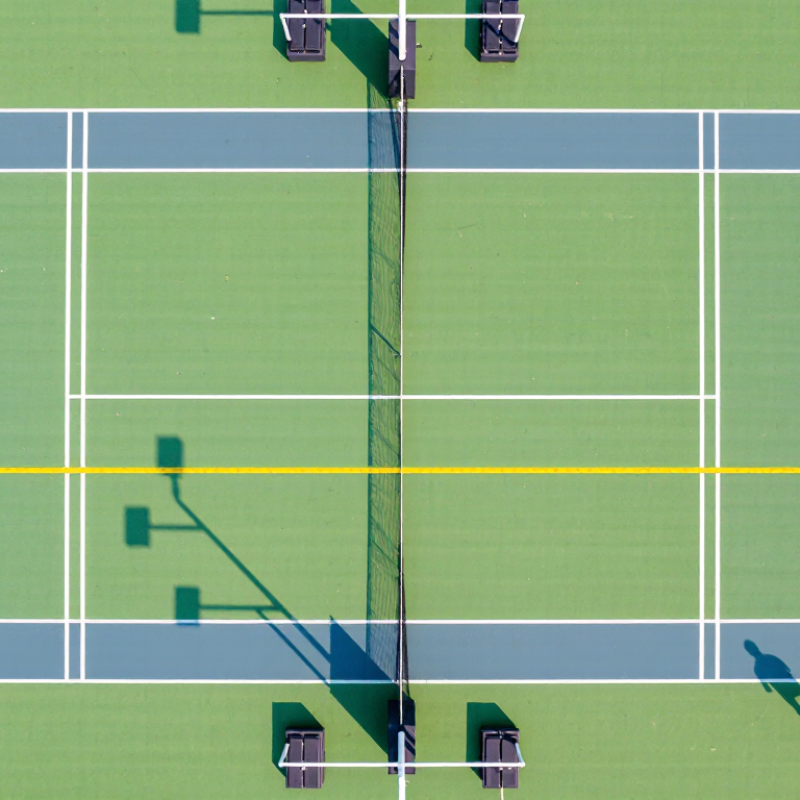
Before raising the net, mark a court measuring 20 feet wide by 44 feet long. These dimensions apply to both singles and doubles play. Use a tape measure and square corners; even a small skew can make sideline calls feel unfair. The non-volley zone extends 7 feet from the net on each side. Mark its boundary clearly, but remember that this line belongs to the zone. Measure twice. I have found that chalk or removable court tape makes adjustments easier when the first layout looks slightly crooked.
Set the net to 36 inches high at both sidelines and 34 inches at the center. Check with a measuring stick rather than judging by eye. A center strap helps hold the lower middle height, while a taut net keeps the top edge level. Don’t pull so hard that the posts lean inward. That can distort the court and change the net’s shape. Recheck the measurements after tightening, especially on uneven pavement or grass. Small height errors are easy to miss, and I still find it worth checking the center again before play.
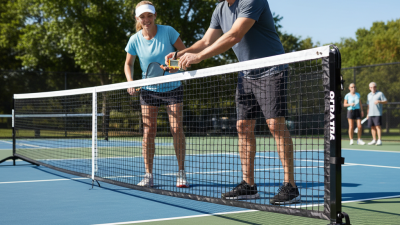
A standard pickleball court is 44 feet long and 20 feet wide. The non-volley zone extends 7 feet from the net on each side. Set the net to 36 inches high at the sidelines and 34 inches at the center.
Before unpacking anything, gather the net, two posts, a tape measure, and the center strap if it is separate. Check that the net fabric has no tears and that the post locks move freely. A small mallet can help secure ground sleeves, while a court already marked with boundary lines makes placement easier. Keep the measuring tape handy; eyeballing the center is a common shortcut that can leave the net sagging unevenly.
USA Pickleball’s official equipment specifications set net height at 36 inches beside each sideline and 34 inches at the center. Measure from the playing surface, not from a raised post base, and recheck after tensioning. The SFIA 2024 Topline Participation Report estimated 13.6 million U.S. pickleball participants in 2023, highlighting why consistent setup matters across busy courts. Still, measurements can shift when a surface slopes or a sleeve sits crooked. Check twice. A slight adjustment now is easier than resetting the net after play begins.
Choose firm, level ground before placing the posts. Measure 22 feet between their inner faces, keeping the posts centered across the court. The sidelines should sit evenly inside them, with each post just beyond the court boundary. A tape measure helps; guessing by eye often leaves one side cramped.
Set each post upright in its ground sleeve or stable base, following the equipment instructions. Press down on the base and check for wobble before attaching the net. Take your time. If the posts lean, the net may pull unevenly and shift during play.
Connect the net, then adjust its tension in small steps. Avoid overtightening, which can strain the posts or fittings. Check that the net reaches 36 inches at the sidelines and about 34 inches at the center.
Recheck the post spacing after tensioning; the frame can move slightly as the net tightens. I would not skip this check, even when the setup looks straight. A tiny misalignment is easy to miss until the ball clips the edge. If a base rocks on the surface, reposition it rather than relying on the net tension to hold it in place.
Attach the net’s top cable to each post hook, then secure the side straps without twisting the mesh. Keep the bottom edge close to the court, but not dragging across it. Tighten evenly from both ends; pulling hard on one side can make the net lean or lift.
USA Pickleball’s 2024 Official Rulebook specifies a net height of 36 inches at the sidelines and 34 inches at the center. Measure both points with a tape measure after tensioning, since a taut cable can raise the middle. The SFIA 2024 Topline Participation Report counted 13.6 million U.S. pickleball participants in 2023, underscoring why consistent setup matters on shared courts. Small detail. Recheck the center after securing the center strap, and adjust until it meets the 34-inch mark. Avoid cranking the cable too tight; that can stress posts and fittings. I would recheck the side straps, too. They can loosen as the net settles, especially on a first setup. Don’t trust the eye alone.
A net can look straight while its center sags. Measure it before play, using a tape measure and the court’s playing surface as your reference. The standard height is 36 inches at each sideline and 34 inches at the center. Check both ends, not just one; uneven ground or a loose support can make the readings differ.
Make sure the net crosses the court in a straight line, parallel to the baselines. Stand behind each end and look along the top edge. It should not angle toward one sideline or twist around a post. Adjust the supports, then measure again. I sometimes find that a small tension change shifts the center height, so I recheck it after tightening. Close enough by eye may not be close enough.
Tips: Use a rigid tape measure, and measure from the court surface to the top of the net. Check the center strap, if fitted, and make small adjustments. Write down a reading if the net keeps shifting. That detail can help you spot a setup issue next time.