How to Set Up a Pickleball Net Correctly?
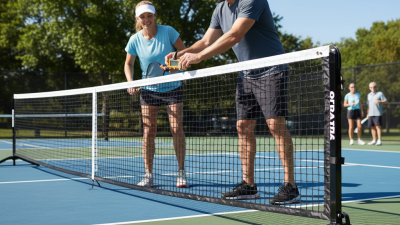
Setting up a pickleball net correctly is crucial for an enjoyable game. A proper **Pickleball Net Set Up** ensures fair play and enhances the overall experience. Many players overlook the importance of the net's height and tension. A poorly installed net can lead to frustration and errors.
When you approach the net setup, remember that precision matters. The net should stand at 36 inches in height at the sidelines and 34 inches in the middle. Using a measuring tape is essential. You might find that your first attempt falls short. This is an opportunity to reflect on the details and make adjustments.
Ensuring the net is taut is also vital. A loose net can lead to unpredictable bounces. Players often forget to check the net's tension. This oversight can impact gameplay. With practice, setting up a net becomes second nature, but it's crucial to be diligent each time. Aim for excellence as you prepare for your next game.
Understanding Pickleball Net Specifications
When setting up a pickleball net, it's essential to understand the specifications. A standard pickleball net measures 36 inches high at the sidelines and 34 inches in the middle. This height is crucial for fair play. Ensure the net is made of durable materials to withstand outdoor conditions. Choose a net that offers stability and maintains its shape during play.
To achieve the correct setup, use proper tension. An overly loose net can lead to inconsistent bounces. Conversely, a net that is too tight might break. Aim for balance. Check the net's height frequently during use. This can help you identify any sagging that may occur over time.
When securing the net, consider the anchor points. They help maintain the net's position. Use weight to stabilize it, especially in windy conditions. An unstable net can disrupt the game. Remember, attention to these details enhances the overall playing experience. Adjusting your net might seem tedious, but it ensures a fair and enjoyable match. Keep experimenting with your setup until you find what works best.
Pickleball Net Height Specifications
Choosing the Right Location for Your Pickleball Net
Choosing the right location for your pickleball net is crucial for an enjoyable game. Start by looking for a flat, even surface. Uneven ground can lead to frustrating gameplay and injuries. A concrete or asphalt surface is ideal. Avoid gravel or sandy areas, as they can affect ball bounce and player movement.
Next, consider the space around the net. Ensure there is ample room for players to move freely. A distance of at least 10 feet on all sides is recommended. This allows for quick movements without hitting obstacles. Proximity to fencing is also important. If the net is too close to a fence, retrieving balls can become a chore.
Weather conditions play a role, too. Ideally, set up your court away from strong winds or heavy sun exposure. Shade can enhance comfort during play. If you’re near trees, watch out for falling leaves and branches. These may disrupt your game. Think about your audience as well. If you’re hosting friends, a more visible location is preferable.
Assembling the Pickleball Net Components
Assembling a pickleball net requires attention to detail and an understanding of its components. The typical net consists of a fabric mesh, sturdy poles, and anchors. Begin by laying out these parts. Check for any missing or damaged pieces before starting. Inspect the net for tears and ensure that the poles are not bent. This initial step can save time and frustration later.
Next, follow the instructions closely. Most nets have specific assembly guidelines. Begin by attaching the poles to the base. Make sure they are secure and straight. The height of the net is crucial; it should be 36 inches at the side and 34 inches in the middle. Use a measuring tape for accuracy. While this step seems simple, it often gets overlooked, leading to issues during gameplay.
Once the frame is up, stretch the net across. Secure it with anchors if necessary. This step may require adjustment to ensure it is taut. A loose net can affect play quality. Regularly checking your net's condition will also help maintain its effectiveness. Remember, a well-assembled net contributes to an enjoyable game, while an improperly set net may cause disruptions during matches.
Correctly Tensioning the Net for Optimal Play
When setting up a pickleball net, proper tensioning is crucial for optimal gameplay. A net that is too loose can lead to unpredictable ball bounces, while a net that is too tight may hinder the play experience. Start by placing the net at the center of the court. This ensures even tension on both sides.
Aim for the net to stand 36 inches high at the sidelines and 34 inches at the center. A good idea is to use a measuring tape to check these heights. Many players overlook this step, thinking it's not important. In reality, proper measurements can significantly improve your game.
Adjusting the tension both horizontally and vertically is essential. Tighten or loosen the net's cords while checking the height as you go. A net that looks good might not perform well if tension isn't checked regularly. Always consider the weather and environmental factors. Wind can affect how you set the net, requiring adjustments each time you play. This process takes time but ensures optimal conditions for all players.
How to Set Up a Pickleball Net Correctly? - Correctly Tensioning the Net for Optimal Play
| Step Number |
Action |
Details |
Tips |
| 1 |
Select Location |
Choose a flat surface with adequate space. |
Ensure the ground is level to prevent irregular net tension. |
| 2 |
Set Up Posts |
Install posts at the correct distance apart (22 feet). |
Use a measuring tape for accuracy. |
| 3 |
Attach the Net |
Secure the net to the posts using the provided fasteners. |
Make sure the net is evenly distributed across the width. |
| 4 |
Tension the Net |
Adjust the tension until the net is taut but not overly stretched. |
Check the height at the center (36 inches) and edges (34 inches). |
| 5 |
Final Check |
Ensure the net is straight and properly elevated. |
Adjust as needed before play begins. |
Final Adjustments and Verifying Net Height
Setting up a pickleball net correctly is crucial for an enjoyable game. After installing the net, focus on final adjustments. Ensure the net height is precisely 36 inches at the center and 34 inches at the sidelines. Use a reliable measuring tool to verify these measurements accurately. It helps maintain the standard for competitive play.
After you set the height, check the net tension. It should be taut but not overly tight. A net that's too loose can sag and affect gameplay. On the other hand, a net that's too tight can strain the frame. You may need to make small adjustments. Walk along the net and observe for any inconsistencies. This final inspection ensures the net is uniform across the court.
Sometimes, it’s easy to overlook minor details, like the net's anchoring. Secure the ends properly to prevent movement during play. If you're not careful, it can lead to disruptions. Pay attention to these adjustments; they can significantly impact your game experience. Remember, even small discrepancies can be frustrating during a match. Regularly check and maintain these aspects for the best results.

 +86 18033331305
 CONTACT NUMBER
 CONTACT NUMBER